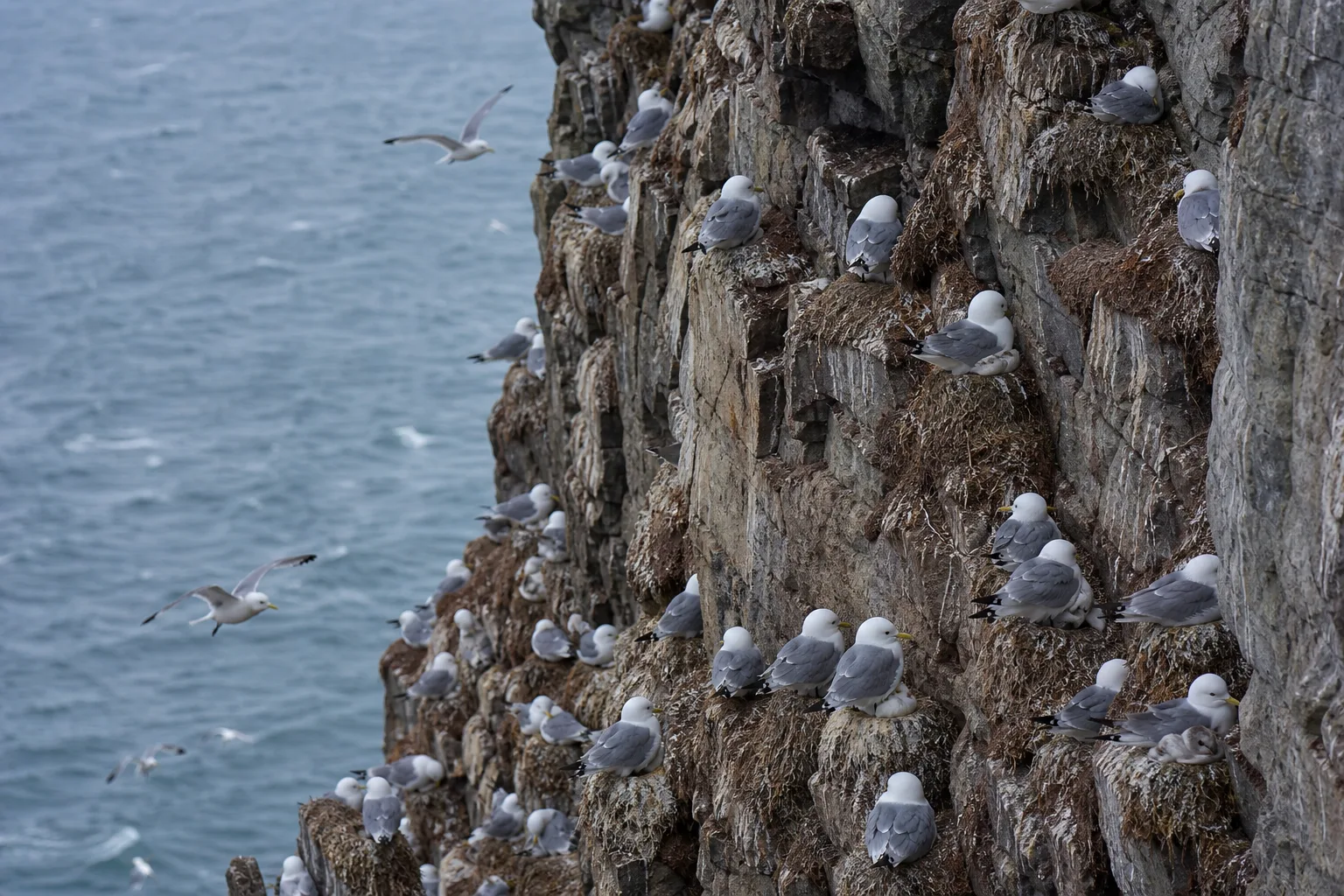
Arctic wildlife stories often begin with one visible species. Food webs do not. Sea ice, ocean mixing, plankton, fish, seabirds, marine mammals, land animals, and people are connected through timing, movement, habitat, and access to food. A careful account resists turning one photograph into a complete ecological explanation.
Relationships before symbols
A polar bear at an ice edge can illustrate habitat use, but a sighting does not establish population change. A kittiwake colony can reveal breeding activity, yet attendance varies through a day and season. Narwhal calls can be recorded under water, while detection depends on distance, sea state, ice, instrument depth, and background noise. The method and the species must be read together.
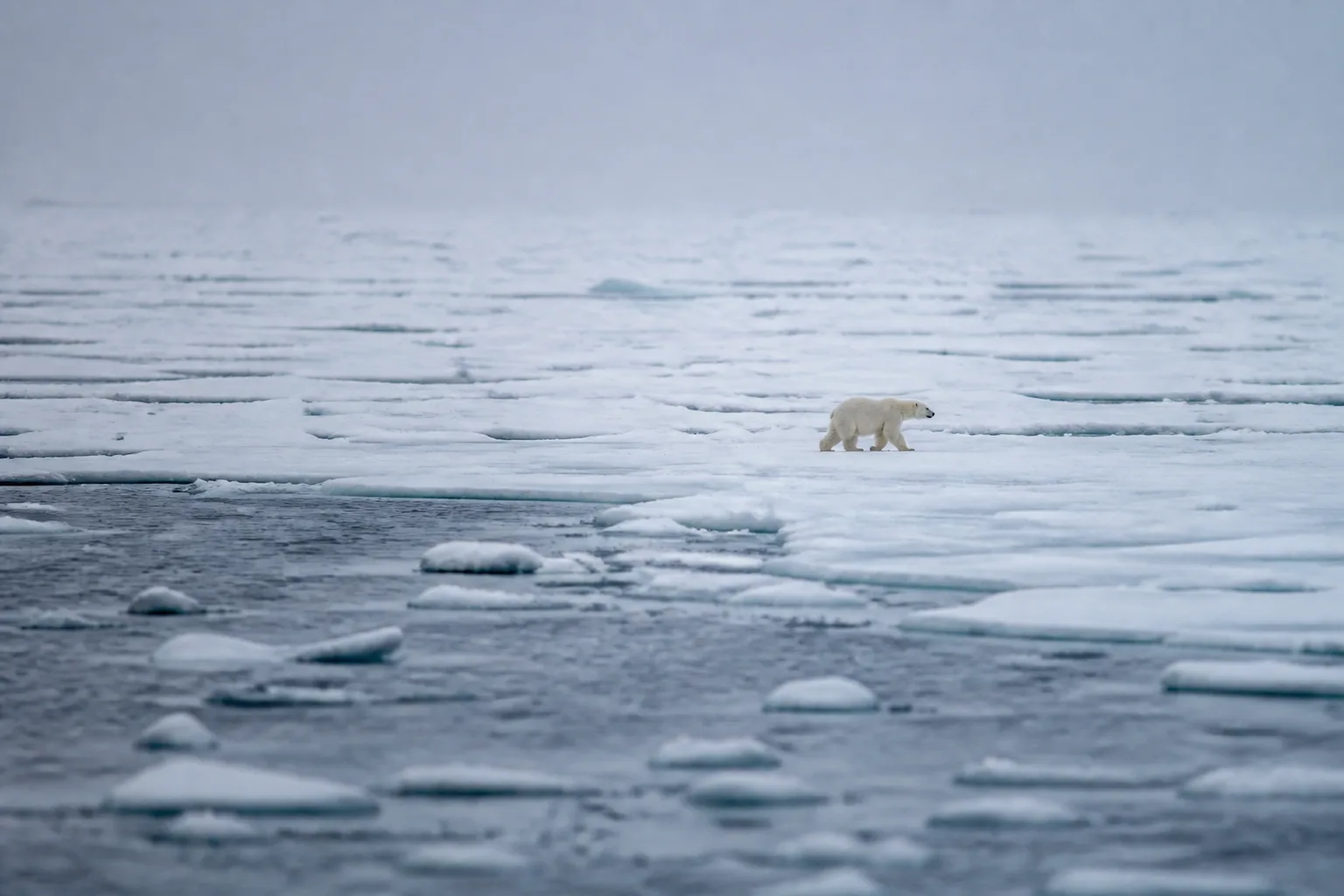
Long-lens imagery protects distance and preserves scale. It also helps prevent a common visual error: making a distant animal fill the frame until the image implies an intimate encounter. Captions should state distance or method when that information changes interpretation. Locations may need to remain broad when precise disclosure could increase disturbance.
Timing links the web
Many Arctic relationships depend on timing. Sea-ice formation and retreat affect access to habitat. The seasonal pulse of plankton supports consumers higher in the food web. Insects emerge during windows that matter to birds. Rain-on-snow can create an ice crust that changes access to forage for reindeer and caribou. One event may have serious local consequences without proving a long-term trend by itself.
Observation records become more useful when they connect dates, weather, snow and ice conditions, behavior, and effort. A list of species without the time spent looking can make absence impossible to interpret. A photograph without surrounding conditions can detach behavior from the habitat in which it occurred. Community observation may carry long context that a short campaign cannot reproduce.
Sound is habitat too
Marine mammals use sound for communication and orientation. Vessel noise can overlap with biologically important frequencies, but a recording needs careful classification and metadata. A spectrogram is an analysis view, not a direct statement of what an animal experienced. The fictional story Listening for narwhals in Baffin Bay explains deployment, masking, confidence, and the difference between a detected call and a population conclusion.
The NOAA Arctic Report Card chapter on Atlantification describes changes in ocean structure and species context. It should be read as a regional assessment with defined observations and models, not as evidence that every food web responds identically. Ecological responses vary with location, depth, season, and the pathways by which water masses and species move.
A responsible wildlife record
- Names the observation date, duration, location scale, and method.
- States whether an image or detection is illustrative, opportunistic, or part of a sampling design.
- Keeps wildlife distance, consent, and sensitive locations in the method.
- Separates individual behavior, local conditions, and population-level inference.
- Connects a species to habitat and food-web evidence without using it as a mascot for every Arctic change.
The goal is not to remove wonder from wildlife. It is to keep wonder from replacing evidence. Visit Sources and methods for the public records and editorial standards used across this fictional demonstration.
Population evidence needs design
Population estimates may use counts, mark and recapture, genetics, acoustics, tracking, nests, or models that account for animals missed during a survey. Each approach carries assumptions about movement and detection. A lower count on one visit may reflect timing, weather, visibility, or genuine change. Trends become credible through comparable effort, suitable models, and enough time to distinguish variation from direction.
Food-web evidence has similar limits. Stable isotopes, diet samples, prey surveys, and movement records illuminate different parts of a relationship. They can show association without proving one mechanism caused a change. Responsible summaries state the studied species, place, period, and method, then avoid extending the conclusion beyond them.
Long records also need ordinary observations. A season with typical timing, an unsuccessful detection, or a survey stopped by weather still contributes context when effort is documented. Archives built only from unusual encounters exaggerate drama and weaken the comparisons needed to recognize ecological change. Quiet records provide the baseline that lets later changes be recognized without hindsight bias.