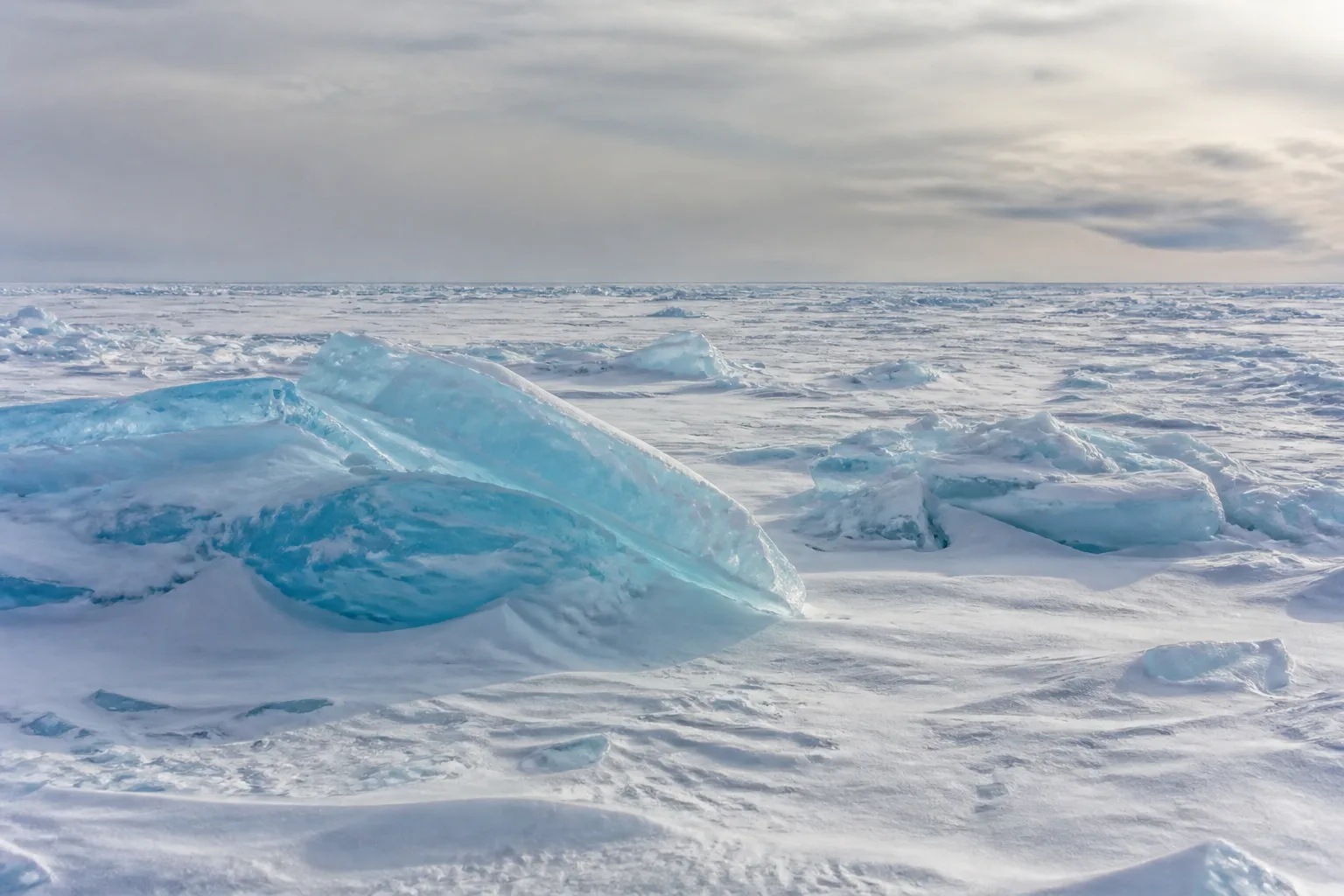
The Arctic is not one system and no single measurement can explain its change. These five fictional programme areas are designed to make relationships visible while keeping evidence, interpretation, and decision separate. Factual claims point to primary sources, and illustrative field scenes are identified through the global disclosure.
Five connected programmes
Sea ice
Extent, age, thickness, drift, deformation, melt ponds, and the challenge of connecting a field point to a regional record.
Wildlife and food webs
Species relationships, habitat, timing, responsible observation distance, and the limits of turning a sighting into a trend.
Permafrost and freshwater
Thaw, hydrology, minerals, water chemistry, habitat, and the monitoring gaps between watersheds.
Communities and livelihoods
Authority, consent, data governance, capacity, and research questions shaped with the people who live with the consequences.
Open observations
Methods, metadata, uncertainty, stewardship, and records that remain understandable beyond one project or team.
How to read these pages
Each programme page begins with what can be observed, then explains the chain from method to interpretation. A regional assessment may combine satellites, stations, ships, community observations, reanalysis, and models. The page does not present those records as work performed by Still North. Instead, it offers a fictional editorial structure for exploring the named public sources.
Start with the programme closest to your question, follow the links beside each factual claim, and visit Sources and methods for the complete source list and limitations.